
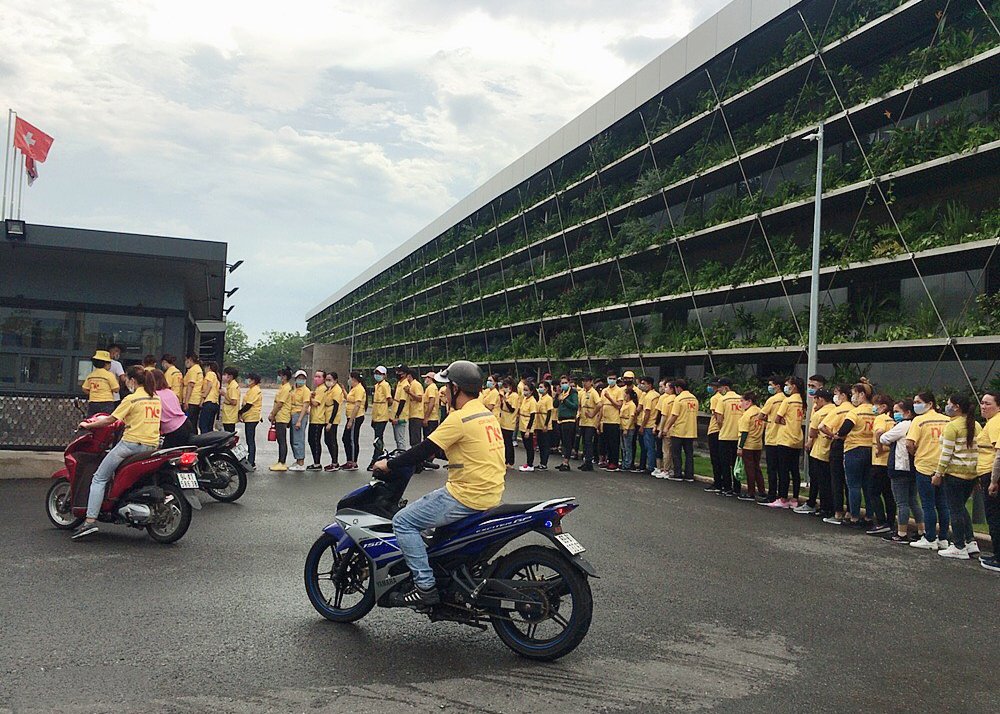
Context: why Chinese businesses move to Vietnam
Rising labor costs in China along with tariff incentives have caused many Chinese manufacturing enterprises to open factories in Vietnam, especially in the textile, electronics, and component industries. This group's need to hire workers in Vietnam often requires large quantities in a short time.
Steps to hire workers in Vietnam for a new factory
- Determine the number of employees for each operating phase (trial run phase, full capacity production phase).
- Work with labor supply providers that have a network in the area where the factory is located (Bac Giang, Bac Ninh, Hai Phong, Binh Duong, Dong Nai...).
- Agree a recruitment plan in batches, avoid putting all needs at the same time.
- Sign a labor supply contract, deploy basic training before entering the production line.
Important legal note
Enterprises need to ensure that the labor supply provider has a valid operating license (labour leasing is a conditional business in Vietnam), and the supply contract clearly states the responsibilities of both parties regarding labor safety and social insurance.
Managing Chinese experts working in Vietnam
In parallel with recruiting Vietnamese workers, businesses often need to bring Chinese experts and technicians to operate the initial production line — this group needs a work permit and should coordinate with labor legalization services to avoid disruptions due to procedures.
Actual deployment speed
With a large number (hundreds of workers), you should work with the supplier 4-6 weeks before the expected date of operation to ensure enough labor source and basic training time.
Is hiring large quantities of labor in Vietnam more difficult than small quantities? It is not more difficult in terms of procedures, but it requires longer preparation time to ensure enough supply, especially in areas where there are already many factories recruiting.
Do Chinese businesses need their own interpreter when working with a labor supplier? Not required if the supplier has personnel who speak Chinese or English; Language support should be confirmed in advance to avoid communication disruptions during deployment.